



S. Rudd is a student who is currently applying to graduate programs. She is interested in researching gender medicine. She has a BS in Psychology.
Introduction
For the past few years, hormonal interventions for post-pubescents with gender dysphoria have been under increasing attack internationally from political activists, radical feminists, and even physician and scientific guilds. This wide tent coalition has diverse reasons and rationales for opposing < 18s, and sometimes people over the age of 18, from accessing access to hormonal therapies, ranging from religious dogmatism—such as stating that gender dysphoria is “something that ‘probably goes back to some of the early heresies in the church’—to feminists arguing that changing the natural human body for what they believe is an exclusively sociogenic phenomenon is reactionary and reinforces archaic gender roles.
In this essay, I will address one of the most common arguments against the autonomy of young people exploring hormone therapies: that patients are too cognitively immature to make medical decisions. This essay will argue that adolescents, particularly those later in puberty possess sufficient cognitive maturity to make informed medical decisions, especially in contexts like gender-affirming care and reproductive health. Finally, I will elaborate on how such arguments can and have harmed girls and women seeking reproductive healthcare.
Are adolescents cognitively mature to consent?
In mainstream media and culture, post-pubescents and young adults have long been portrayed as an incompetent and volatile group. Popular news outlets have frequently described this demographic using terms such as “reckless,” “stupid,” “irrational,” “callous,” “lazy,” “violent,” and even “alien” to describe their maturity (Males, 2006; Males, 2009) . In addition to media pundits themselves arguing for adolescents’ incompetence, scientists are frequently quoted in articles and court briefings arguing for diminished autonomy and responsibility of post-pubescents, typically justifying such beliefs by citing developmental psychology and brain scans measuring differences in adolescents and adults.
So influential was this science that it partially influenced America’s Supreme Court in 2005 to ban the death penalty for individuals under the age of 18 in Roper v Simmons (Filippino, 2018). The American Medical Association’s (AMA) 2005 Amicus Brief went so far as to confidently assert that
“To a degree never before understood, scientists can now demonstrate that adolescents are immature not only to the observer’s naked eye, but in the very fibers of their brains,”
attacking the cognitive capacity of young people (Johnson et al, 2009).
While liberals may celebrate the abolition of the death penalty for those under 18, we must also scrutinize the scientific organizations that filed amicus briefs in the case, particularly their shifting views on adolescent competence. In his dissenting opinion in Roper v Simmons, the deceased Conservative Supreme Court Justice Antonin Scalia commented on disparities surrounding the rhetoric on adolescent competence from the American Psychological Association (APA) in Roper v Simmons and the earlier case of Hodgson v Minnesota, in which the APA argued adolescents possess the cognitive capacity, especially around the age of 14 or 15, to consent to abortions without their parents’ consent or knowledge. Scalia’s dissenting reprimands the agencies for their rhetorical shift, stating:
“In its brief in Hodgson v. Minnesota…, the APA found a “rich body of research” showing that juveniles are mature enough to decide whether to obtain an abortion without parental involvement.” (Brief for APA as Amicus Curiae, O. T. 1989, No. 88—805 etc., p. 18)
The APA brief, citing psychology treatises and studies too numerous to list here, asserted:
“[B]y middle adolescence (age 14—15) young people develop abilities similar to adults in reasoning about moral dilemmas, understanding social rules and laws, [and] reasoning about interpersonal relationships and interpersonal problems.” (Scalia, 2005).
Was Justice Scalia correct in noticing that the APA was being inconsistent with neuroscience and their own past rhetoric about adolescent competence when it became politically salient to do so?
Perhaps, but an independent look at the scientific evidence presents a more nuanced picture of adolescent or post-pubertal cognition and lends credence to some elements of the argument against adolescent culpability (contingent on the circumstance their actions were made in), whilst also supporting the decision-making capacity of middle and late adolescents, particularly in calm and controlled scenarios such as doctors’ offices.
“Hot” vs. “cold” cognition
Understanding adolescent competence and the question of whether adolescents can consent to medical decision-making requires exploring the differences between what developmental psychologists refer to as "hot" and "cold" cognition, as the contexts in which decisions are made significantly influence capacity for sound judgment and action according to the best available research from scholars of adolescent cognition.
The distinction between hot and cold cognition in adolescent development, as outlined by researchers like Icenogle et al. (2019) and Steinberg et al. (2009), highlights how the context of a decision influences the development of cognitive skills.
Cold cognition involves rational decision-making in situations where emotions are not disabling, reaching adult levels in adolescence. This aligns with the APA’s statement, as well as other similar studies (Weithorn & Campbell, 1982), that 14–15-year-olds can make thoughtful, reasoned choices about complex issues, such as medical decisions, under conditions where emotions are not overwhelming.
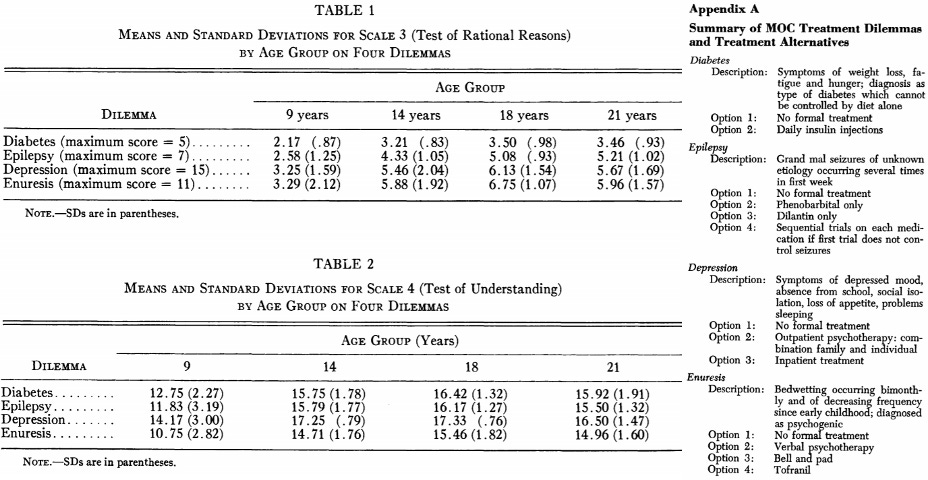
However, hot cognition, which involves emotionally charged decisions often influenced by peer pressure or stress, continues to develop into adulthood. This distinction helps explain why adolescents may perform similarly to adults in situations requiring logical reasoning and deliberation (e.g., in making medical decisions), but may struggle with situations where emotional factors are more prominent (e.g., risky behaviors or decisions influenced by peer pressure).
The conflation by Justice Scalia and many anti-trans and anti-abortion activists attacking younger patients’ autonomy ignores the complicated developmental science supporting both the APA’s statement that mid-adolescents are capable of medical decision-making, as well as the AMA’s insistence that younger offenders could have a diminished capacity in some criminal scenarios.
The importance of supportive environments
To give informed consent to medical interventions, it is generally accepted that an individual must not be in active psychosis or experiencing severe cognitive impairments that undermine their ability to understand and weigh the risks and benefits of their options. Psychological complexities—such as impulsivity, impaired reality testing, or dissociation—can heighten susceptibility to hot cognition, making deliberative decision-making more challenging in certain contexts. This underscores the importance of healthcare providers thoroughly addressing these factors to ensure adolescents are fully supported in making informed decisions about their care.
Recognizing and accommodating these complexities does not erase the evidence supporting adolescent cognitive competence, but instead reinforces the need for care environments structured to facilitate thoughtful, informed choices. Developing decision aids and standardized treatment protocols presents a crucial opportunity for researchers to improve clinical outcomes. By fostering conditions that mitigate hot cognition and promote cold cognition, healthcare providers could better honor the dignity and agency of adolescents, ensuring decisions are both informed and aligned with their long-term well-being.
This is not to suggest that individuals experiencing challenges related to hot cognition are inherently incapable of consenting to medical care, given the right contexts. Rather, it highlights the importance of ensuring that all individuals understand the risks and benefits of proposed interventions.
This raises a critical question: Are care environments adequately equipped to address these complexities and provide the support necessary to foster cold cognition? Some detransitioners’ reports suggest that this may not always be the case (MacKinnon et al., 2023), with individuals citing a lack of capacity to fully understand the consequences of interventions and rushed decision-making processes.
Addressing these concerns does not diminish the evidence supporting adolescent decision-making capacity; instead, it underscores the need for care environments that are attuned to psychological complexities, flexible in their approach, and structured to encourage thoughtful, informed choices. These environments should also work to minimize pressure on patients to conform to rigid or binary treatment paths (e.g., pressuring individuals into surgeries they do not want), allowing for personalized care that respects individual needs. MacKinnon et al. found reports from some detransitioners in Canada who expressed frustration, in hindsight, over not having adequate opportunities to clarify their treatment needs before undergoing medical or surgical transition. These individuals also reported dissatisfaction with clinicians’ practices surrounding informed consent, highlighting a gap between the ideal and reality of care.
Such findings suggest that the failure to create a supportive environment for informed decision-making risks perpetuating a paternalistic approach that disregards empirical evidence on adolescent autonomy. When care environments do not sufficiently account for the complexities of psychological factors and informed consent, they undermine young people’s agency, potentially leading to rushed or poorly understood decisions. This undermines the trust in the medical system and jeopardizes both the long-term mental and physical well-being of those seeking care. Addressing these gaps requires restructuring care environments to foster thoughtful, individualized, and informed decision-making that respects both the complexities of transgender care and the needs of the individuals seeking it.
Steinberg et al.'s (2009) analysis supports this framework, demonstrating that, while adolescents can make informed decisions in cold scenarios—such as in medical settings—their decision-making in emotionally volatile or high-pressure contexts (e.g., running a red light under peer pressure) does not exhibit the same level of maturity. This distinction highlights the importance of considering both cognitive capacity and psychosocial maturity when evaluating adolescent decision-making across various contexts. It also refutes overly simplistic portrayals of adolescents as universally immature or incapable, particularly in scenarios like endocrinology appointments where patients often engage in months of reflection before being seen and participate in discussions with providers before making decisions.
The distinction between hot and cold cognition illustrates that adolescents possess adult-like reasoning capabilities in deliberative scenarios, making them competent to make informed medical decisions in emotionally neutral environments, such as doctors’ offices. While adolescents are more susceptible to emotional and social pressures in certain “hot” contexts, this does not diminish their capacity to thoughtfully engage with complex decisions when adequately supported. It is also essential to acknowledge that individual physicians may occasionally act inappropriately with patients of any age, pressuring them toward specific outcomes—whether to pursue or avoid abortion or to initiate or forgo hormone therapies. Such situations can provoke hot cognition in patients, underscoring the importance of ensuring that medical decisions respect individuals' values and preferences while physicians neutrally communicate the risks and benefits of available options.
The World Professional Association for Transgender Health (WPATH) provides practice recommendations for working with adolescents and their families, emphasizing a comprehensive assessment process (Coleman et al., 2022). According to WPATH, this process should involve understanding the patient’s gender identity, mental health, and capacity to give informed consent (e.g., not in an active state of psychosis), which may help mitigate the effects of “hot cognition” in emotionally charged decision-making environments.
It is important to note that, while such protocols aim to balance informed decision-making with sufficient psychological support, there is an ongoing debate among stakeholders about the role these supports play in helping patients make informed decisions regarding transition-related interventions (Gerritse et al, 2022). Some argue that these interventions may be beneficial, but there is also concern about potential overreach and the possibility of longer assessments worsening patient symptoms, as well as navigating the ethics of assessment when some patients may already possess the cognitive and emotional maturity necessary for decision-making, with former patients of some clinics which mandate assessment reporting negative experiences with being restricted from accessing medication due to the assessment process and at least one report of denial of transition being associated with completing suicide[1], although it cannot be stated with certainty the subject would not have committed suicide if permitted to transition (e.g., Vu gender (mis)treatment, 2021; Transorgnu, 2022).
In recent years, emerging research has highlighted that individuals who detransition and express regret sometimes report not having received sufficient decision-making support at the time of seeking medical treatment or having been pressured to undergo a certain treatment pathway[2]. Other reports of detransition include significant assessment, and positive experiences with gender transition, even so, this research underscores the importance of understanding the nuances of decision-making support as well as respecting the views of all stakeholders. The ongoing debate in the field highlights the need for further research to better serve both transgender individuals and those who detransition, ensuring that decision-making processes are transparent, well-informed, appropriately supported, and free from undue pressure.
Opponents of adolescent autonomy in medicine often conflate the distinctions between hot and cold cognition for political purposes, using simplified or selectively interpreted research to undermine young people's decision-making capacities. This approach not only marginalizes adolescents seeking endocrine care but also sets a dangerous precedent for restricting autonomy in other areas, such as reproductive healthcare. Recognizing the contextual nature of adolescent competence is crucial for crafting policies that respect the agency of trans people, detransitioners, and women and girls seeking abortions and birth control. Denying younger individuals, the right to participate in decisions about their own bodies undermines their dignity and disregards the best available evidence from developmental psychology.
Collaterals effects on women’s access to reproductive healthcare
Less than two years after the decision in Roper, The United States Supreme Court heard Ayotte v. Planned Parenthood of Northern New England, a law challenging minors’ access to abortion without parental involvement. The court would rule in Planned Parenthood’s favor and uphold girls and women’s rights. However, opponents of abortion attempted to seize the groundwork laid by the scientific groups against the juvenile death penalty.
Arguing against teenage girls ability to get timely abortions without parental knowledge or consent, anti-abortion activists argued that
“Parental involvement is critical to ensure not only that the adolescent’s choice is informed, but that it is freely made and not the result of coercion or duress… These concerns are heightened for adolescents who, as this Court has recently observed, are more susceptible than adults to “outside pressure” and other “negative influences,” and more likely than adults to make decisions that are “impetuous and ill-considered.”
Less than two years after filing amicus briefs opposing the death penalty for legal minors on the grounds of developmental capacity, the rhetoric and scientism used to support this stance by medical organizations began to be weaponized to undermine adolescents’ ability to make critical medical decisions by opponents of such procedures.
It is not a coincidence that, at the same time as a global attack on trans rights, the medical autonomy and freedom of girls and women seeking reproductive healthcare is also under attack, sometimes with identical rhetoric to those used to argue against hormonal medicines for trans people. In Florida, a 16-year-old girl was denied an abortion by a right-wing judge because she was not “sufficiently mature to decide whether to terminate her pregnancy” (Yang, 2022). In Texas, a judge denied a teen girl an abortion due to not knowing “any statistics about how many women regret or don’t regret it five, 10, 12, 20 years from now?”, and because the girl in question was allegedly too immature to make such a decision, while another Florida judge denied a girl an abortion because her low GPA indicated insufficient maturity to him (Presser et al, 2022).
There is a long history and practice in America of women and girls being forced to undergo coercive abortion counseling services which lack evidence of efficacy and make abortions more expensive, stressful, and difficult to schedule for girls and women (Foster, 2020). Psychotherapy or psychological assessment for gender dysphoric persons requesting endocrine interventions is commonplace, while being comparably sparse of evidence supporting their efficacy for improving patient symptoms or outcomes, highlighting the need for decent quality research on the positive, negative, or null impacts of such protocols.
Similar assessment protocols are currently globally gaining popularity as a mandatory first-line, and sometimes only-line intervention for dealing with gender dysphoric adolescents (Linander & Alm, 2022; Nousiainen, 2023), frequently ignoring patients’ preferences and values surrounding treatment whilst similarly lacking demonstration of psychotherapy being associated with gender dysphoria outcome improvements.[3] Feminists who argue against trans rights should exercise caution in their rhetoric, as the arguments weaponized against trans persons are comparably applicable to women and girls seeking contraception or abortion.
Final remarks
The debate over whether adolescents possess the capacity to consent to medical decisions, including hormonal therapies for gender dysphoria, is far more nuanced than opponents of trans healthcare often acknowledge. Developmental psychology research provides strong evidence that adolescents are cognitively competent in cold decision-making scenarios, such as medical consultations, where they can process information, weigh risks and benefits, and make thoughtful choices, with limited medical decision-making capacity research conducted on gender dysphoric patients suggest a similar capacity (Vrouenraets et al, 2023). Additionally, emerging evidence suggests that even younger adolescents (<~14-16) can make appropriate decisions when provided with longer appointments and more comprehensive information sessions (Icenogle & Cauffman, 2022).
However, a critical question remains: are these ideal conditions consistently met in real-life settings where gender-affirming care is provided? Qualitative and quantitative data collected from detransitioners (adolescents and adults) highlight some instances where support or assessment may have been inadequate, raising concerns about whether young people are always given the time, space, and resources necessary to exercise cold cognition, especially transmasculine patients assigned female accessing testosterone prescriptions, which has much more immediate and powerful somatic effects than trans women accessing estrogen therapies.
Addressing this concern is vital to strengthen the decision-making capacity of adolescents while engaging in shared decision-making with providers. The development of standardized protocols, better research on environmental requirements for cold cognition, and validated decision-making aids are all important areas of research clinicians and scientists should explore to further enhance the autonomy of their patients, as well as potentially reduce treatment costs. Failure to provide such conditions risks perpetuating a paternalistic approach that lacks research support, undermines young people's agency and has long-term consequences for their mental and physical well-being.
Furthermore, the rhetorical overlap between arguments against adolescent autonomy in gender-affirming care and those used to restrict reproductive healthcare underscores the interconnected nature of these debates (Ashley, 2022). Attempts to diminish the agency of one group inevitably risk setting a broader precedent for restricting the rights of others. Policymakers, medical professionals, and advocates must remain vigilant against efforts to weaponize developmental science selectively, as these efforts can and have eroded fundamental rights and freedoms. Recognizing and respecting the contextual competence of adolescents is critical, not only to advancing equity for trans youth, but also to safeguarding the autonomy of all young people, particularly those who have historically faced systemic barriers in exercising control over their own bodies.
Academic discourse, public policy, and medical practice must reflect this understanding to ensure a future where autonomy and evidence-based decision-making prevail over prejudice and moral panics about adolescence. Activists and scientists interested in the topic of adolescents transitioning should scrutinize the assumptions and evidence base behind age-based restrictions, as well as evaluate via randomized trials or other scientific experiments the impacts (if any) of mandatory psychotherapy and psychological assessments on gender dysphoria outcomes, as well conduct research to better understand any iatrogenic harms which could be caused by such protocols.
[1] Smith et al. (2001) shared in the discussion aspect of their paper that “One subject [denied access to hormonal therapies] had such a difficult time coping with his psychiatric problems that he had been hospitalized a number of times and committed suicide around the time of the follow-up interview.” They follow up this patient death by stating that “Not to allow these patients to start medical treatment seems to have been good decision.” The authors do not reflect upon whether treatment denial played any potential role in the patient’s suicide.
[2] Detransitioners are diverse and often have differing opinions on matters such as clinical assessment or psychotherapy as well as all other topics. For a detransitioner critical of such protocols, see D.D. (2025) or @luckartikasari on Instagram/TikTok.
[3] There is poor evidence beyond the prepubertal years for the contemporary clinical practice of psychological assessments or ‘counseling’ for improving symptoms of gender dysphoria. While Gender Dysphoria research broadly suffers in issues of quality, the quantity of research supporting the benefit of assessments or mandatory psychotherapy for treating gender dysphoria is nearly nonexistent outside of potentially helping comorbidities like depression or anxiety.
Thank you for reading The One Percent!
If you enjoyed this post, please share it with your friends, family, or colleagues:
You can also subscribe for free to receive new posts and support our work:
The problem as I see it is not so much that kids are an "incompetent and volatile group". Kids and their parents cannot give informed consent when they are actively being misled about the risks and benefits of these treatments. It is not just about maturity; it is about organizations like WPATH and APA misleading professionals and the public about what we know and don't know. These treatments were unleashed on an unsuspecting public without a body of research to support their use and without efforts to collect data on their efficacy. These organizations have made unsubstantiated claims about these treatments (e.g. that it lowers suicide risk, or that puberty blockers are completely reversible). They have betrayed the public. And children have been harmed in the process.
Comparing these treatments to abortion is a red herring. Minors accessing abortions are capable of understanding what they stand to lose (i.e. their childhood) if they go onto become parents. A child who starts on puberty blockers or an adolescent who starts on cross sex hormones has no way of understanding what they are at risk of losing (e.g. fertility, sexual functioning, brain development, bone health, cognitive functioning). That is why safeguarding is needed.
I’m so tired of the word “cognition”. Borrowed from the industrial age, it likens human thought to mechanics alone. Now the acceptable buzz term is “neuro”, but it’s all scientism at the end of the day. The idea of cold logical reasoning and rationality is not new, it comes from the enlightenment, and was appropriated by the powerful and applied to whoever needed social control in their eyes. This terminology replaced words such as “evil”, “disorder” and “degenerate” which had begun to be seen as vulgar. Something cooler was needed. Cool, calm rationality replaced virtue as a standard to judge people by. Back to this article, I think that this idea of hot and cold decision making looks like propaganda to me. Why? Because it conveniently oversimplifies a difficult matter into another “haves and have-nots” dichotomy. It’s also misdirection, because most of the harm that befalls children and young teenagers happens in their own homes, so there’s an enormous amount of hypocrisy going on here. Children and young people mostly need protecting from the hot flash decision making of the adults who say they love them, and the damage that it can do, not the other way around.